Projects
Our Work
Ongoing Projects
Key areas of PCPF’s current and upcoming projects that combine environmental, social, and community development initiatives.
Environment & Biodiversity
Conservation of biodiversity is a core part of PCPF’s mission. Efforts include raising awareness about protecting native species, habitats, and ecological balance.
- • Development of online educational materials: e-learning, videos on ecological gardening, organic farming, composting, and native plant conservation.
- • Policy influence: engaging decision-makers and environmental NGOs to strengthen biodiversity strategies and nature-based solutions.
- • Restoration and sustainable management of natural areas, integrating green infrastructure for urban resilience.
Urban Development & Infrastructure
PCPF works on basic infrastructure including water, sanitation, disaster management, and transport planning. Community participation is encouraged through local governance, civil society, and citizen engagement.
- • Alignment with global agendas: SDG 11 (Sustainable Cities), New Urban Agenda, Sendai Framework, Paris Agreement.
- • Support participatory community processes for planning and delivering infrastructure services.
Human Rights & Social Justice
- • Advocacy for marginalized communities; legal aid including court support and lawyers.
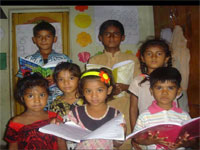
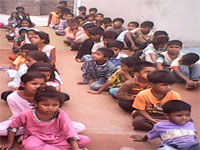
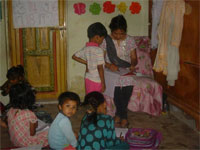
- • Education support for underprivileged children.
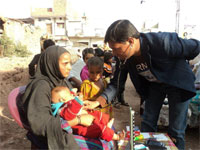
- • Healthcare initiatives: clinics, medical camps, free medicines.
- • Vocational training to reduce unemployment.
- • Programs focused on women and children, orphans, and marginalized girls.
Disaster Relief & Humanitarian Aid
PCPF participates in relief, rehabilitation, and reconstruction during and after natural disasters, as well as disaster risk reduction (DRR) to strengthen community preparedness.
Community Mobilization & Advocacy
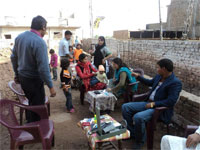
- • Mobilizing citizens, local governments, research institutions, and international organizations.
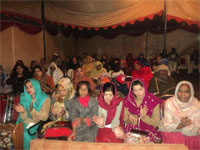
- • Conducting seminars, conferences, exhibitions, and public events on urban sustainability and environmental themes.
- • Emphasis on long-term, sustainable solutions rather than short-term fixes.
Membership & Networks
PCPF has approximately 750 general members, including 350 women. The organization participates in national and international networks such as Peace Foundation, Pakistan Christian Welfare Society, and several UN forums.
PCPF has accreditations with UNFCCC (climate change), UNCTAD, and other international bodies.
Examples of Recent / Planned Projects
- • Biodiversity Project: Producing e-learning content on eco-gardening, composting, and native plant conservation; contributing to Pakistan’s national biodiversity strategy; exploring nature-based solutions for urban climate resilience.
- • Advocacy & Policy: Lobbying for stronger biodiversity policies, capacity building, raising awareness, and developing local environmental stewardship expertise.
Strengths & Impact
- • Holistic approach: combines social justice, infrastructure, environment, and community development.
- • Grassroots + policy: helps people on the ground and influences policies at higher levels.
- • Local + international reach: engages both Pakistan-focused and global frameworks.
- • Empowerment-oriented: education, vocational training, and community mobilization.
Challenges & Risks
- • Funding constraints for long-term projects.
- • Slow policy influence and adoption.
- • Measuring impact of advocacy and awareness programs is difficult.
- • Sustaining community buy-in requires ongoing facilitation.
- • Social justice work may involve political or security risks in some areas.
Conclusion
PCPF plays a multi-dimensional role in Pakistan: advocating for human rights and marginalized communities, while promoting environmental conservation, urban development, and sustainability. Their approach combines grassroots service delivery with policy advocacy, making it comprehensive and impactful.